
Setting the table for four
What goes down first, how much table four seats really need, and the small placements that stop a game stalling. Our own setup order, from bare wood to first wall.
A mahjong table is not complicated, but it has an order, and the order saves you the shuffling-things-around minute that every group knows. This is how we lay one out.
Measure the table before anything else
Our mats are 31.5 inches square, with one printed version at 35. A standard card table is 34 inches square, which is why 31.5 is the size we make most of: the mat sits inside the edge and leaves a lip of bare table for drinks, which is exactly where drinks should be. On a round kitchen table, measure the flat middle, not the diameter, and remember that racks want a straight edge to sit against.
Mat first, always
The mat goes down before a single tile. Ours are a woven fiber top on a rubber backing, about a tenth of an inch thick, and they do three jobs at once. They stop the whole layout drifting when someone leans in, they take the noise out of a wash, and they keep tile corners off a finish you cannot replace. Unroll it and let it sit for a few minutes if it came out of a bag; fiber remembers a roll and flattens on its own.
One rack per seat, pushers facing out
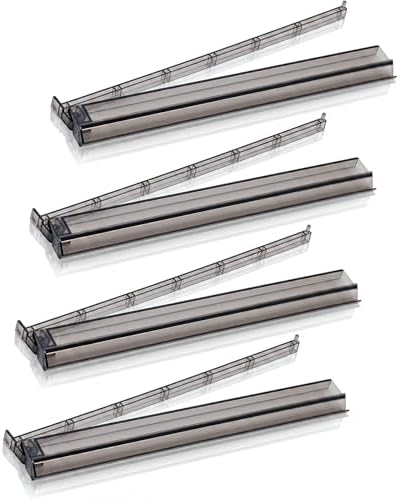
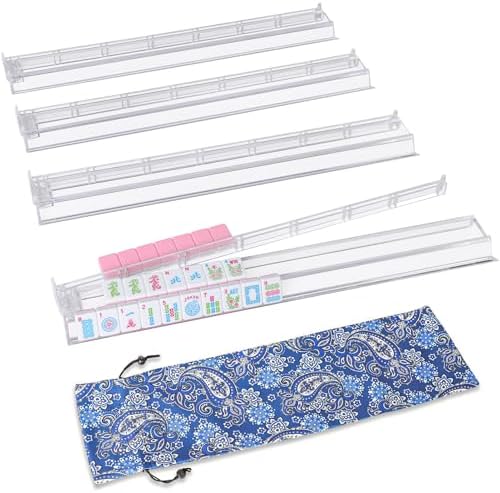
Racks come in sets of four for the obvious reason. Ours run about 19.7 inches, which is close to the mat edge on purpose, so a rack lines up with its own side and the four of them frame the play area square. Set each one down with the pusher hinged to the outside, away from the middle. If a pusher points inward, the first person to move a wall discovers it, and by then three walls are already built.
The small pieces, placed on purpose
- Dice go in the middle where everyone can see the roll. Two or three depending on the style your group plays.
- The wind indicator sits by the dealer, not floating in the center where it gets knocked.
- Chips stay off the mat if you can help it. Ours are 0.9 inches across in five colors, and a stack of them on the fiber is one elbow away from a scattering.
- The card reader, for American play, goes flat in front of each seat rather than propped. Propped readers fall.
Building the wall without four sore backs
Tiles get spread face down across the mat, and this is the part that goes faster with mixers. Ours are slim plastic paddles you run underneath the loose tiles, roughly 6.8 by 4.9 inches, and two people with two mixers scramble a full set in the time it takes one person to push tiles around by hand. They live with the rest of the small gear in table extras. Then each seat builds their own stretch of wall and pushes it forward on the pusher. Nobody reaches across the table, which is the entire reason pushers exist.
Breaking down
Reverse it. Tiles into the trays or the tile bag, racks stacked, dice and indicator into whatever pocket they live in, mat rolled last with the fiber side out so it never creases against itself. A table that comes apart in the same order every night is a table that gets used on a weeknight, and a weeknight game is the whole point.
Racks and pushers, four to a set

More from the game room
American or Chinese: which set are you actually shopping for
The two games share a name and almost nothing else at the table. Tile counts, faces, racks and what each style needs before four people can sit down.
CareKeeping melamine tiles clean, and the mat under them
Melamine resists scratches and hates hot water. What we use on tiles, what the mat instructions actually mean, and the storage habits that decide how a set ages.
On the movePacking a set to travel
Soft bag or aluminum case, what fits in each, and the packing order that keeps 166 tiles from rattling loose in a car. Plus the count that stops a set going home short.