
American or Chinese: which set are you actually shopping for
The two games share a name and almost nothing else at the table. Tile counts, faces, racks and what each style needs before four people can sit down.
Almost every question that reaches us starts in the same place. Someone learned the game at a friend’s house, went looking for a set, and found two of them wearing the same word. American and Chinese mahjong are cousins, not twins, and the difference decides which box you want, whether you need racks at all, and what your table will look like on a Thursday night.
What is in the box
An American set runs 166 tiles. The breakdown is fixed: 36 dots, 36 bams, 36 cracks, 12 dragons, 16 winds, 16 flowers and 8 jokers, and we pack spare jokers and blank tiles alongside them so a lost tile does not retire the set. The jokers are the giveaway. A Chinese set has none.
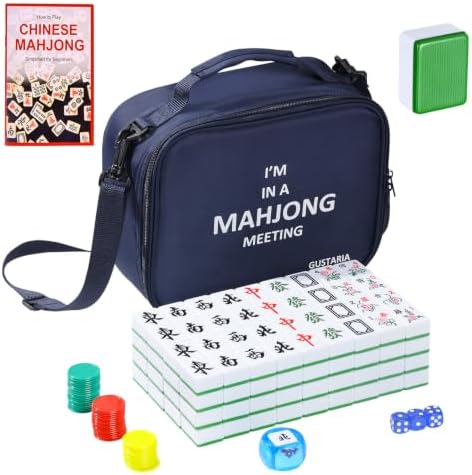
A Chinese set runs 144 tiles, or 146 in the numbered version we make, where the faces carry Arabic numerals next to the traditional marks. Both counts play the same game. The numbered faces are a teaching aid, and plenty of experienced groups keep them anyway because reading across a table is easier when the number is printed rather than counted.
Size, and why it is not a detail
Our American tiles are the standard 1.2 by 0.9 by 0.5 inches. That size exists because it has to slide into a rack, and racks are built to it. Our Chinese tiles run larger, 1.5 inches on the numbered sets and 1.65 on the big green ones, because they are meant to stand on a table rather than sit in a ledge. Buy large tiles for a rack set and they will not seat. Buy standard tiles for a Chinese game and nothing breaks, they are simply smaller in the hand than most players expect.
Racks or no racks
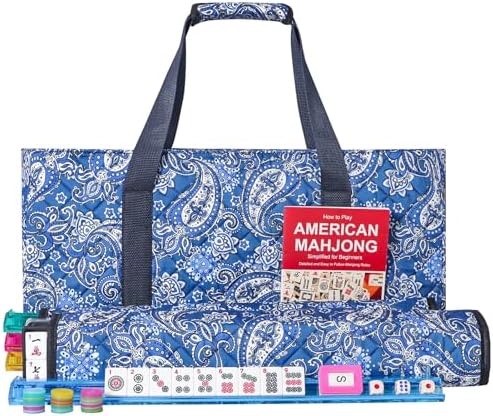
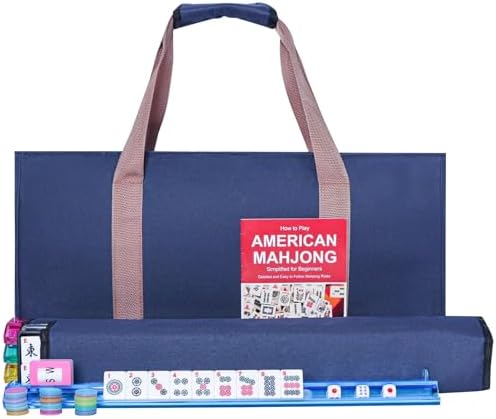
American play needs racks, one per seat, and almost always with a pusher attached so the wall can be moved forward without four hands reaching across. Chinese play traditionally does not. Tiles stand in a wall on the table and each player leans their hand against nothing at all. If you are buying for a Chinese game and see a set without racks, that is not an omission.
The card question
American groups play from a hand card that changes every year, and it does not come from us. It arrives separately and it is the one piece of the table we do not make. What we do make is the acrylic reader that holds it flat with a cut-out window, so the row you are reading stays the row you are reading. Chinese play has no equivalent.
If your table plays both
Some of ours does. The honest answer is two tile sets and one of everything else. A mat works for either game. Chips, dice and a wind indicator work for either game. Racks sit in the cupboard on Chinese nights and come out on American ones. Our card deck is the odd exception, printed to cover both styles, which makes it the cheapest way to find out which game your group actually likes before you commit to tiles.
If you are still deciding, count the chairs first. Both games want four. Everything after that follows from the style, and the style follows from whoever taught you. Our table builder walks the same decision in four steps and ends with pieces that fit each other.
More from the game room
Setting the table for four
What goes down first, how much table four seats really need, and the small placements that stop a game stalling. Our own setup order, from bare wood to first wall.
CareKeeping melamine tiles clean, and the mat under them
Melamine resists scratches and hates hot water. What we use on tiles, what the mat instructions actually mean, and the storage habits that decide how a set ages.
On the movePacking a set to travel
Soft bag or aluminum case, what fits in each, and the packing order that keeps 166 tiles from rattling loose in a car. Plus the count that stops a set going home short.